
How to Improve Your EPC Rating: A Berkshire Homeowner’s Guide for 2026
Written by the Frank EPC team of accredited Domestic Energy Assessors (DEAs). Last updated July 2026.
The short answer
The fastest way to improve your EPC rating is to fix the fabric of your home first, then upgrade heating and lighting. For most Berkshire homes, topping up loft insulation, adding cavity wall insulation, fitting LED bulbs and draught proofing is enough to move up a full band, often from D to C, for roughly £1,000 to £2,000. Bigger jumps come from a new condensing boiler or an air source heat pump. Before you spend anything, get an accredited EPC assessment so you know your current score and exactly which improvements earn the most points. Homes rated C or above typically sell for more, sell faster and cost hundreds of pounds less to run each year.
Ready to see where you stand? Frank EPC provides accredited same day and next day certificates across the county. You can book an EPC in Berkshire online in a couple of minutes.
What is an EPC rating and what counts as good?
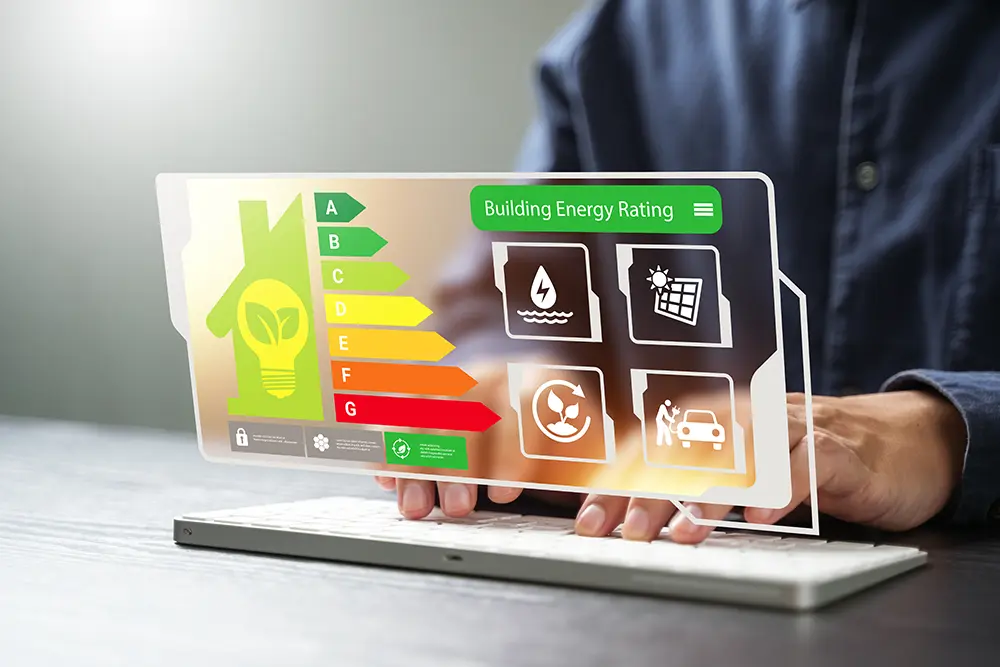
An Energy Performance Certificate (EPC) scores your home from A to G, where A is the most efficient and G is the least. Behind the letter sits a number from 1 to 100, known as the SAP score. The bands break down like this:
| EPC band | SAP score range | What it means |
| A | 92 to 100 | Very efficient, very low bills |
| B | 81 to 91 | Highly efficient |
| C | 69 to 80 | Good, the common target |
| D | 55 to 68 | Average for UK homes |
| E | 39 to 54 | Below average |
| F to G | 1 to 38 | Poor, expensive to run |
Most UK homes sit at a D. The magic number for many owners is 69, the point where you cross into band C. That C threshold matters for landlords in particular, because private rented homes in England and Wales are set to need an EPC C by 2030, according to GOV.UK.
How can I improve my EPC rating? The upgrades that earn the most points
Not every improvement is worth the same. The trick is to spend on the measures that add the most SAP points per pound. Here is the running order the assessors recommend, from best value upward.
Start with insulation
Insulation is almost always the best value improvement, because it is cheap relative to the points it earns and it cuts your bills straight away.
Topping up loft insulation to the recommended 270mm is one of the simplest wins. Going from little or no roof insulation to a full depth can lift your score by around 10 to 15 points, and it usually costs just £300 to £600, according to the Energy Saving Trust.
Cavity wall insulation delivers the largest single gain for many homes. If your walls have an uninsulated cavity, filling it costs roughly £800 to £1,500 and can add 5 to 10 points. For a home sitting just below the C threshold, this is often the measure that pushes it over.
Add the quick wins
Some of the cheapest changes still move the needle:
- Swap every halogen or old bulb for LED. It costs £100 to £300, adds a handful of points and lowers your electricity use immediately.
- Draught proof around doors, windows, letterboxes and pipes. Strips from any DIY shop cost as little as £30.
- Insulate your hot water tank with a jacket if you have one. It is a small spend for a reliable point or two.
Together these low cost measures can add 10 to 20 SAP points for under £1,000, which is often enough to climb a full band.
Upgrade heating for the bigger jumps
If insulation alone does not get you over the line, look at your heating. A modern condensing boiler can add 5 to 15 points, though it usually needs pairing with insulation to cross into band C.
The single biggest improvement most homes can make is switching from a gas or oil boiler to an air source heat pump, worth 10 to 20 points or more. Heat pumps score well because they deliver several units of heat for every unit of electricity they use. They are a larger investment, but the Boiler Upgrade Scheme currently offers a grant of £7,500 towards one for eligible households, according to GOV.UK.
What is the cheapest way to improve an EPC rating?
If budget is tight, focus on the measures with the best cost per point. As a rough guide from 2026 pricing:
| Improvement | Typical cost | Rough EPC impact |
| LED lighting | £100 to £300 | 3 to 8 points |
| Draught proofing | £30 to £200 | 1 to 3 points |
| Loft insulation top up | £300 to £600 | 10 to 15 points |
| Cavity wall insulation | £800 to £1,500 | 5 to 10 points |
| New condensing boiler | £2,000 to £3,500 | 5 to 15 points |
| Air source heat pump | £7,000 to £13,000 before grants | 10 to 20+ points |
A common D to C package is a loft top up, cavity wall insulation and some cheap controls or draught proofing, moving many homes up a band for around £1,000 to £2,000. Prices are typical guide figures and vary by property.
Are there grants to help pay for it?
Yes. Depending on your income, location and heating system, you may be eligible for support. ECO4, which has been extended to December 2026, and the Warm Homes: Local Grant can cover insulation and heating upgrades for eligible households. The Boiler Upgrade Scheme offers £7,500 towards a heat pump. It is always worth checking eligibility before you pay out of pocket, because grants can cut the cost of reaching a C by a large margin.
Why bother improving your EPC rating?
Beyond ticking a legal box, a better rating pays you back. Moving from D to C can cut annual energy bills by a few hundred pounds, and that saving repeats every year. A higher rating also helps at sale time, since more efficient homes tend to attract stronger interest from buyers who are wary of running costs. And if you own a rental, an up to date, higher rated certificate is your starting point for the EPC C standard coming for landlords by 2030.
How do I get the points that actually count?
This is where a lot of money gets wasted. Owners spend thousands on upgrades that only nudge the score, because they guessed rather than measured. The smarter route is to book an accredited assessment first. Your Domestic Energy Assessor can show you a recommendation report listing exactly which measures earn the most points for your specific property, so every pound is well spent. Once the works are done, you order a fresh assessment to lock in the new, higher rating.
Frank EPC handles both the before and the after. Get your baseline certificate, make your improvements, then rebook. You can arrange your EPC assessment online, and we cover Bracknell and the wider county with same day and next day slots.
Frequently asked questions
How long does it take to improve an EPC rating? The works themselves can take anywhere from an afternoon (LED bulbs and draught proofing) to a few days (insulation and a boiler). The new rating is only official once a fresh EPC assessment is carried out and lodged, which Frank EPC can often do the same or next working day.
Can I improve my EPC rating myself? Some measures, yes. LED bulbs, draught strips and a hot water tank jacket are all simple DIY jobs. Insulation, boilers and heat pumps need professional installation, and every improvement only shows on your certificate after a new assessment.
How many points do I need to go from D to C? Band C starts at a SAP score of 69. If your current EPC shows, say, 64, you need at least 5 more points. A single measure like cavity wall insulation can sometimes cover that gap on its own.
Does a new boiler improve your EPC rating? Yes, a modern condensing boiler typically adds 5 to 15 points. On its own it may not cross the C threshold, so it works best combined with insulation.
How much does it cost to improve an EPC from D to C? For most homes, around £1,000 to £2,000 using insulation and quick wins. Homes needing a heat pump or major fabric work can spend more, though grants often reduce the bill significantly.