
RDSAP 10 EPC Changes: What London Owners Must Know
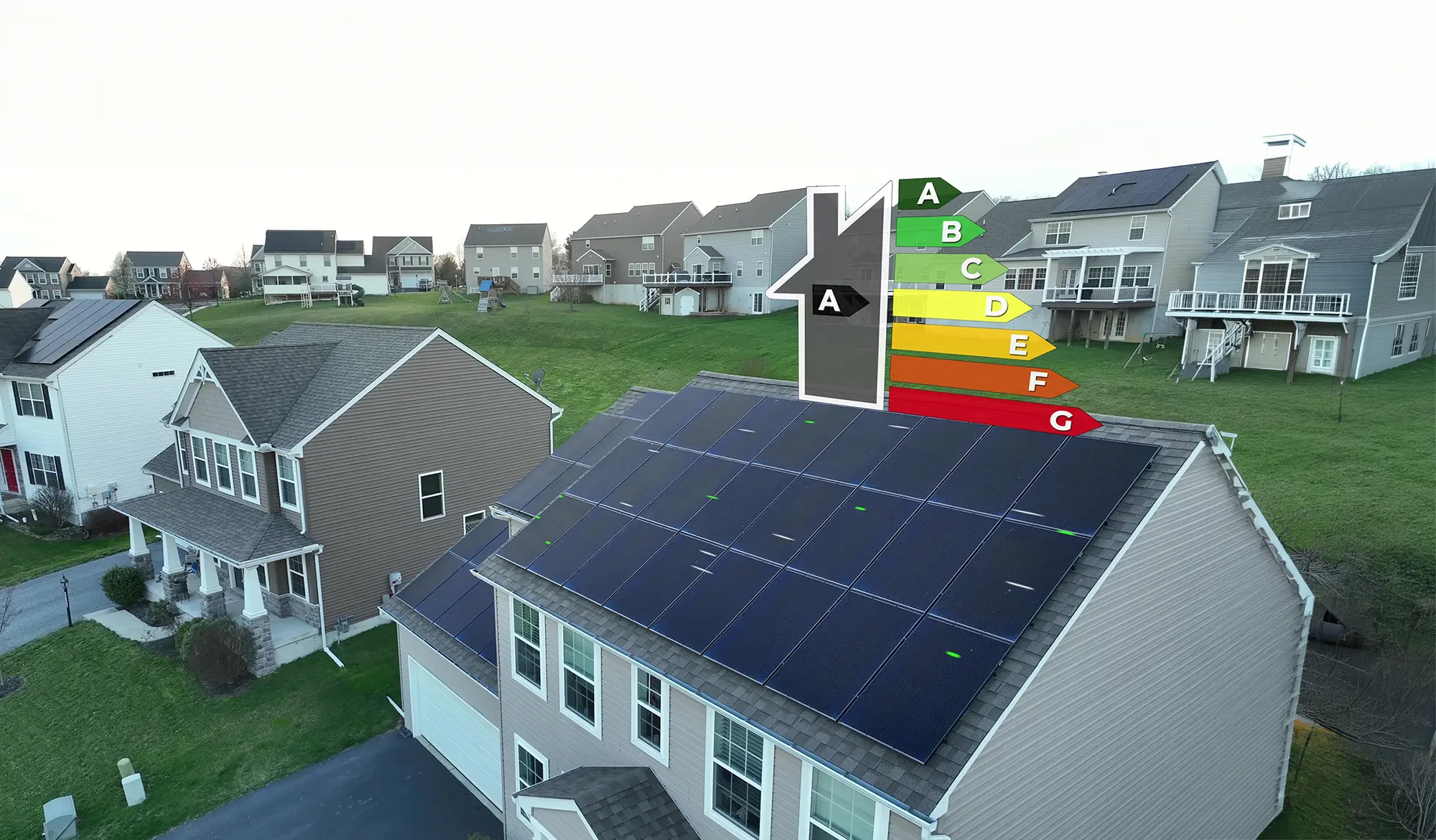
Worried the RDSAP 10 EPC changes will lower your rating? You are not alone. The new method went live on 15 June 2025. It changed how every existing home in England gets assessed.
This guide explains the RDSAP 10 EPC changes in plain English. You will learn what changed, whether your rating is affected, and what to do next. Then we show how this links to the 2030 deadline facing London landlords.
What is RdSAP 10?
RdSAP 10 is the methodology used to produce Energy Performance Certificates for existing UK homes. It went live on 15 June 2025, replacing RdSAP 9.94. Assessors now collect more detailed, evidence-based data about your property. This makes your EPC rating more accurate and closer to how your home really performs.
The name stands for Reduced Data Standard Assessment Procedure. It is the engine behind your EPC. According to industry bodies, this is the biggest EPC shake-up since certificates began in 2007. You can read the official EPC guidance on GOV.UK.
What changed under the RDSAP 10 EPC changes?
Under RDSAP 10, assessors record far more detail and rely on evidence. Improvements now only count if you can prove them.
Here is what changed under RDSAP 10:
- Windows are measured by size, type and condition.
- Heating systems are rated on real evidence, such as model numbers.
- Smart heating controls are now recorded.
- Ventilation options expanded to cover fireplaces, chimneys and flues.
- Air pressure test results can be entered when evidence exists.
- Walls, roofs and floors allow far more detail.
- Insulation is logged by type and thickness, not assumed.
- Assessors can record two wall types for one building part.
Each point has the same goal: your EPC should reflect your real home, not assumptions.
RdSAP 10 vs RdSAP 9.94: what is the difference?
Old assessments leaned on assumptions. The new method relies on measured, evidenced data. That single shift drives most of the change.
| Feature | RdSAP 9.94 (old) | RdSAP 10 (new) |
| Data detail | More default assumptions | More measured detail |
| Heating | Often assumed | Based on evidence |
| Ventilation | Limited options | Greatly expanded |
| Improvements | Counted more freely | Counted only with proof |
| Survey time | Shorter | A little longer |
Put simply, your rating now depends on what you can show. That makes good record keeping more valuable than ever.
How do the RDSAP 10 EPC changes affect your rating?
Your EPC rating can go up or down under RDSAP 10. Homes with documented improvements may score higher. Homes without proof may score lower than before.
It comes down to proof. Older assessments often gave credit by assumption. The new method needs evidence for that credit.
Good news on timing too. Your current EPC stays valid for its full 10 years. You need a new one only when you sell, let, or renew.
In our London assessments, producing loft insulation proof has changed a property’s recorded band on the day. Evidence really is everything now.
What the RDSAP 10 EPC changes mean for London property
London homes feel these changes more than most. Older terraces, period flats and conversions have complex features. RDSAP 10 measures them in far more detail.
Many London homes have solid walls or sit in conservation areas. These features affect your rating and your improvement options. A local assessor who knows the new method gives you a fairer result.
Frank EPC covers London and the surrounding areas. See the areas we cover or book your EPC assessment when you are ready.
How the changes link to the EPC C by 2030 deadline
As of 2026, every rented home in England and Wales must reach EPC C by 1 October 2030. The government confirmed this in its Warm Homes Plan. You can check the landlord energy efficiency guidance on GOV.UK.
An accurate RDSAP 10 EPC is your starting point. It shows where your property stands today. From there, you can plan any improvements needed before 2030.
More change is coming after that. New EPCs using the Home Energy Model are expected in late 2027. They will replace the single rating with four new measures.
What documents do you need for your RDSAP 10 assessment?
Gather your evidence before the assessment. Under RDSAP 10, improvements only count when you can prove them.
Have these ready:
- Insulation guarantees or installation certificates
- Boiler or heating make, model and manuals
- Window installation or FENSA certificates
- Smart thermostat details
- Any air pressure test results
- Records of past improvements
Bring whatever you can find. More proof usually means a fairer, more accurate rating.
Frequently asked questions
Will my EPC rating change under RDSAP 10?
Possibly, in either direction. RDSAP 10 relies on evidence rather than assumptions. Homes with documented upgrades may score higher, while homes that cannot prove improvements may score lower. Good paperwork and an accurate assessment give your property the fairest result.
Do I need a new EPC because of RDSAP 10?
Not straight away. Your existing EPC stays valid for its full 10 years. You will need a new one when you sell, start or renew a tenancy, or when it expires. A fresh EPC also helps you plan for the 2030 rules.
What documents should I have ready for my assessment?
Collect proof of any improvements. This includes insulation guarantees, your boiler make and model, window certificates, smart thermostat details, and any air test results. Improvements usually only count toward your rating when you can evidence them, so this paperwork really matters.
How do the RDSAP 10 changes link to the 2030 deadline?
Closely. RDSAP 10 gives you an accurate baseline rating. The government has confirmed rented homes in England and Wales must reach EPC C by 1 October 2030. A further EPC change, using the Home Energy Model, is expected in 2027.
Is my current EPC still valid?
Yes. Your existing EPC remains valid for its full 10 years from the issue date. You can keep using it until then. A new RDSAP 10 EPC is needed when you sell, let, renew a tenancy, or when the old one expires.
The bottom line
Together, the RDSAP 10 EPC changes made your certificate more accurate and more reliant on evidence. Your rating can rise or fall, so good paperwork matters. This is also your first step toward the 2030 standard.
Want to know where your London property stands today? Book your EPC with an accredited assessor trained on the new method. Call, WhatsApp or email Frank EPC to get started.
Still unsure if your current EPC holds up? Get in touch and we will talk it through, with no jargon.